
BLOG
Why Is My Engine Squealing? Bad Tensioner Pulley Symptoms Explained
You know that moment—you start the engine and instead of a normal idle sound, there’s this sharp squeal from the front of the car. Not subtle. You can’t miss it.
In most cases, that sound isn’t random. It usually comes from the serpentine belt system, especially the belt tensioner or the pulley on it.
Even though it may start as a small noise, it often points to wear inside the accessory drive system, which is responsible for powering several key engine components.

Table of Contents
What’s Actually Going On Under the Hood
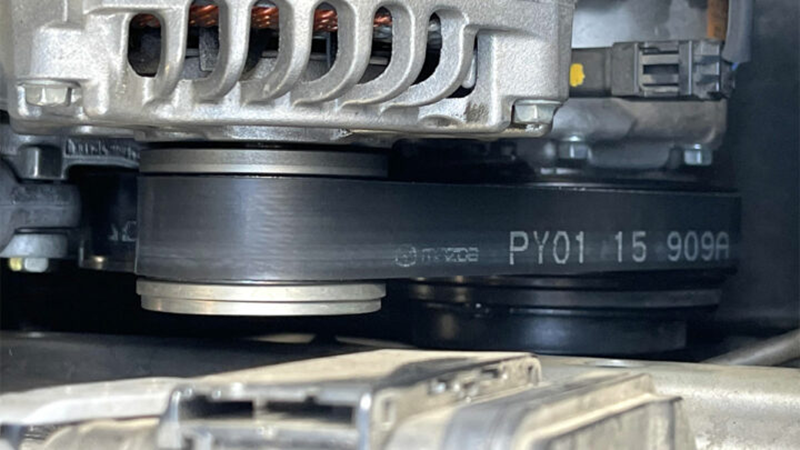
The serpentine belt is basically the engine’s main power line. It runs the alternator, AC compressor, power steering pump, and in some setups, even the water pump.
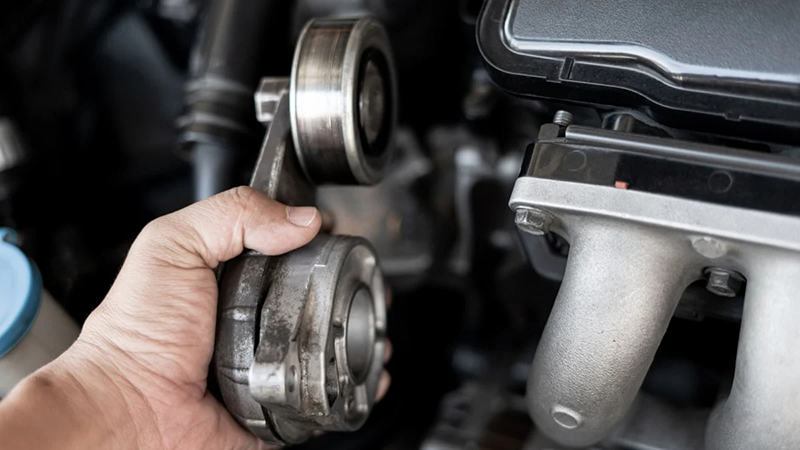
To keep it working properly, there’s a spring-loaded tensioner pushing against the belt. It keeps adjusting by itself as the engine runs. Not because it’s “smart,” but just because it’s designed to maintain pressure all the time.
At the end of that arm is a small pulley. It looks simple, but it plays an important role—keeping the belt tracking in the right direction as everything spins.
When everything is fine, you don’t really notice any of it. No sound, no vibration. It just blends into the background of the engine.
But once something starts to wear—usually the tensioner spring getting weak or the pulley bearing drying out—you’ll hear it. Not instantly loud in most cases. It usually starts subtle, then slowly gets worse over time.
Sometimes people don’t even realize it’s the belt system at first. All they notice is a wisp of noise from the morning engine start-up or under a heavy engine load.
What a Bad Tensioner Pulley Sounds/Feels Like
Most drivers notice the sound first. But there are a few common patterns that help identify the issue:
A light chirp at idle
Not a constant squeal, more like a “bird chirp” that comes and goes. This often happens when the belt is slightly slipping or the pulley surface is uneven.
A loud squeal when accelerating
So You step on the gas, and suddenly it gets noisy under the hood. This is almost always caused by increased load on the engine, putting more load on a weak tensioner and causing belt slip.
A rough grinding noise
This is more serious. It usually means the pulley bearing is already failing internally. Instead of smooth rotation, the bearing starts breaking down and creates metal-on-metal noise.
Belt looking off or frayed
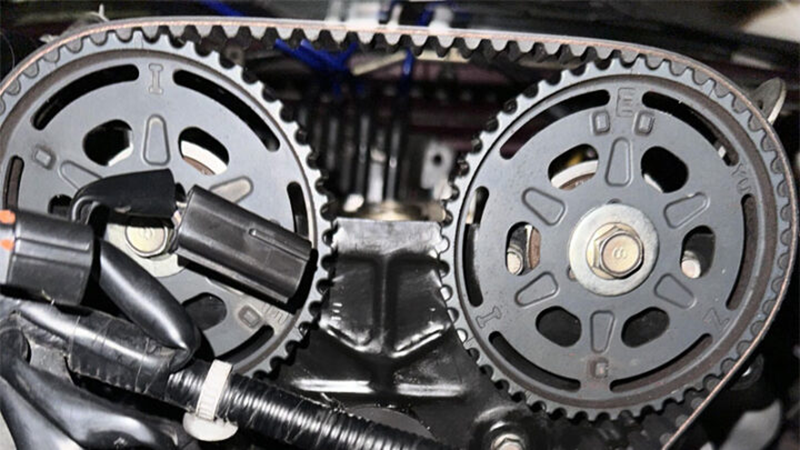
If the belt isn’t sitting straight, something in the tensioner system is not maintaining alignment. Over time, this can cause edge wear, cracking, or even belt separation.
Small side effects
You may also notice indirect symptoms such as:
- Headlights dimming slightly at idle
- Steering feeling heavier than usual
- Air conditioning not cooling as effectively
These happen because the belt is no longer transferring power efficiently to engine accessories.
Idler Pulley vs Tensioner Pulley (Easy Way to Think About It)
People mix these up all the time, especially when diagnosing engine noise.
Idler pulley = just a guide wheel that helps route the belt
Tensioner pulley = guide wheel + spring-loaded arm system that actively maintains belt tension
Both rotate with the belt and both can fail over time. That’s why noises in the front engine area often require checking both components instead of guessing.
A worn idler pulley usually causes a steady noise, while a failing tensioner often creates noise that changes with engine load.
Simple Ways to Check It
Nothing fancy is needed to do a basic diagnosis:
Spray a bit of water on the belt while running
→ If the noise changes or disappears briefly, the belt surface may be glazed or worn.
Spin pulleys by hand (engine OFF)
→ Smooth rotation means OK. If you feel roughness, grinding, or hear noise, the bearing is likely damaged.
Move the tensioner arm
→ It should feel firm and controlled. If it feels weak, stuck, or jerky, the internal spring mechanism may be failing.
These simple checks can often point you in the right direction before replacing any parts.
Can You Still Drive?
Technically yes, but it is not recommended.
The wrong tensioner pulley may still run for a little while but is unpredictable. And if it fails completely, the serpentine belt can slip off, or drop off entirely.
When that happens, multiple systems stop working at once:
- Alternator stops charging the battery
- Power steering becomes difficult
- Cooling system circulation may be affected
This is why a simple squealing noise should not be ignored, even if the car still feels drivable.
Replacing It (Basic Idea)
Replacing a tensioner assembly is usually a straightforward job for most vehicles:
- Release belt tension using a wrench or tensioner tool
- Remove the serpentine belt
- Unbolt the old tensioner assembly
- Install the new unit securely
- Refit the belt according to the routing diagram
The most important step is double-checking belt alignment before starting the engine. Even a slight misalignment can cause immediate noise or wear.
Final Thought
Most engine squeals don’t come out of nowhere. The belt system usually gives you early warning signs—it just depends on whether they are noticed in time.
A bad tensioner pulley is one of those problems that starts small but becomes obvious quickly once the wear increases.
Ignoring it for too long doesn’t just increase noise—it increases the risk of losing multiple engine systems at once.
Optimize Your Supply Chain
Work with a Trusted Bearing Manufacturer Today!
Leave us a message. We will contact within 12 hours.