
BLOG
Explore Key Factors Influencing Global Bearing Pricing
Bearings sit at an awkward intersection of commodity and precision product. A deep-groove ball bearing may look deceptively “standard,” yet its price can move meaningfully with steel markets, energy costs, and freight rates—and it can also jump because of microscopic differences in geometry, surface finish, cleanliness, and inspection rigor. If you have ever compared quotes for what appears to be the same part number from different regions or brands, you have already seen this tension in practice.
This article breaks down the main drivers behind bearing pricing—from the material cost stack and manufacturing yield, to supply-chain shocks and trade policy—so procurement and engineering teams can interpret price spreads without guessing.
Raw materials and metallurgical “cleanliness”
For many common rolling bearings, material is not a rounding error; it is the foundation. When high-carbon chromium bearing steels move up or down, suppliers typically adjust pricing quickly because the metal content is embedded in every ring and rolling element.
But the relevant variable is not only the price of “steel” in the abstract. Metallurgical route and consistency matter:
Steel grade and processing: Standard bearing steels (often comparable to 52100-type chemistries) can be produced with different levels of inclusion control and different melting/refining routes. Cleaner steel tends to improve fatigue life, but it also costs more to make.
Stainless and corrosion-resistant alloys: If the application needs corrosion resistance (e.g., washdown, marine exposure), stainless options such as 440C-class materials generally carry a premium, not only for alloying inputs but also for machining and heat-treatment considerations.
Non-steel rolling elements: Hybrid or full-ceramic bearings (e.g., silicon nitride rolling elements) command higher prices because the upstream material and the downstream processing are fundamentally different—powder processing, sintering, finishing, and tighter scrap controls can all raise unit cost.
In other words, “material cost” is really a bundle: commodity inputs, energy intensity, scrap rate, and the supplier’s ability to hold consistent metallurgy at scale.
2) Geometry, tolerance class, and the cost of yield loss
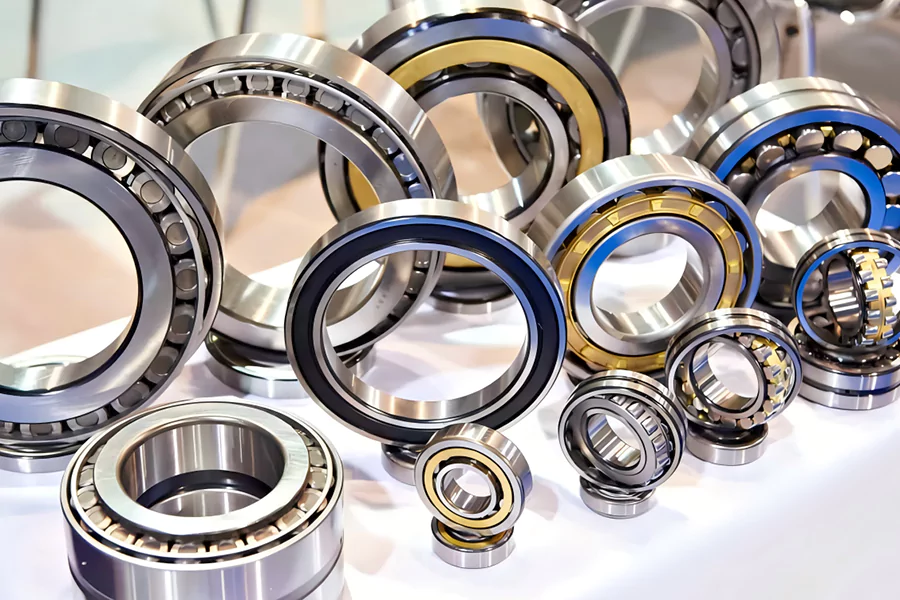
Price differences are often easiest to understand through the lens of manufacturing yield. The closer a bearing must track an ideal geometry—roundness, waviness, raceway form, runout—the more processing steps and inspection gates it tends to require, and the more parts are rejected or reworked.
Two points routinely surprise non-specialists:
Higher precision is not linear cost: Moving from “standard” to high-precision classes can be a step change. Tighter limits typically mean finer grinding, longer cycle time, more controlled thermal conditions, and more metrology time per unit.
Noise/vibration and consistency grades add cost even when dimensions look similar: Bearings intended for electric motors, robotics, or machine tools may need tighter noise/vibration behavior, more consistent internal geometry, and more stringent cleanliness during assembly. Those requirements often do not show up in an abbreviated line item description, yet they affect price materially.
Industry nomenclature varies by region and standard (ABEC and ISO systems are both used, and they are not a direct one-to-one translation in every case). The practical takeaway is simpler: the more the supplier must “manufacture to the measurement,” the more cost is consumed in process control and lost yield.
3) Heat treatment, surface engineering, and lubrication system choices
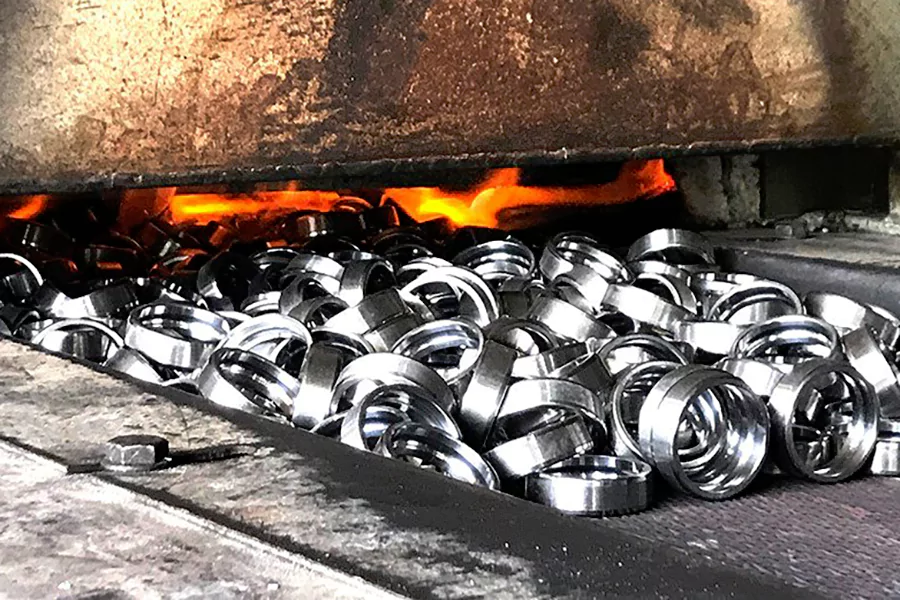
For many bearing families, heat treatment is where performance is “locked in,” and it is also where cost can quietly accumulate. Uniform hardness, controlled retained austenite, minimized distortion, and repeatability across lots all require disciplined process control and inspection.
Beyond heat treatment, pricing can shift due to:
Coatings and surface treatments
Sealing strategy
Grease selection and fill control
These choices tend to be application-driven. They are also a common source of quote confusion: two bearings may share the same basic size, yet differ substantially in heat-treatment specification, sealing, and lubricant system.
4) Customization, low volumes, and qualification overhead
Mass-produced catalog bearings benefit from tooling amortization, stable routings, and predictable yields. By contrast, custom bearings—or even “semi-custom” variants (nonstandard clearances, cage materials, special seals, unique marking/traceability requirements)—tend to carry premiums that are not simply proportional to machining time.
Why? Because customization frequently triggers additional overhead:
Engineering and process validation
Nonrecurring tooling and setup
Longer lead times with more variability
5) Supply chain dynamics: freight, energy, and lead-time risk
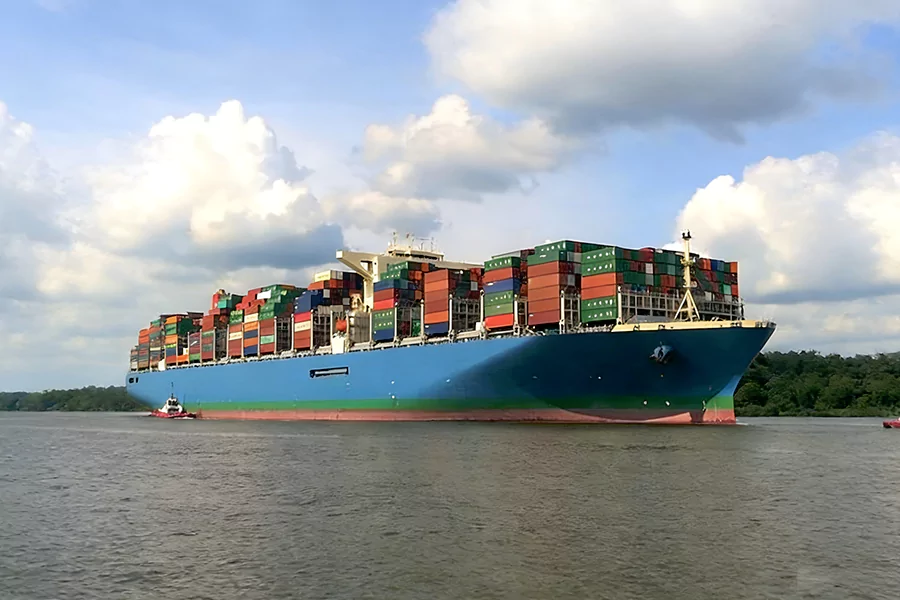
Bearings are globally traded, which makes their delivered price sensitive to more than factory cost. Depending on the sourcing route, a meaningful share of total landed cost can come from logistics, currency effects, and lead-time risk.
Key contributors include:
Ocean/air freight and capacity constraints: Rate swings, port congestion, and container availability can quickly change landed cost—especially for bulky shipments or urgent airfreight conversions.
Energy costs: Energy is embedded in steelmaking, heat treatment, grinding, and shipping. In high-energy-price periods, suppliers often face broad cost pressure across the entire value chain.
Inventory financing and buffer stock: When lead times become unstable, distributors and OEMs often hold more inventory. The carrying cost is real and frequently shows up indirectly as higher “market price.”
6) Trade policy, tariffs, and compliance requirements
Trade policy can create sudden price discontinuities that have little to do with bearing design. Tariffs, anti-dumping duties, and changing rules of origin can all alter the economics of a sourcing decision. In practice, buyers may find that a “cheaper” ex-works price becomes uncompetitive once duties, brokerage, compliance documentation, and route changes are included.
Compliance expectations can also matter. Requirements related to traceability, material declarations, or customer audits can raise supplier cost—not necessarily because the bearing is different, but because the administrative and quality systems around it are.
7) Total cost of ownership (TCO) vs. unit price
In industrial settings, the purchase price is often the smallest number in the story. Bearings influence uptime, energy consumption (via friction/heat), maintenance labor, and collateral damage risk when they fail. A lower unit price can be rational only if it does not increase lifecycle cost.
When comparing options, teams typically consider:
Expected life under real contamination and load: Catalog ratings assume conditions that may not resemble the plant floor.
Maintenance burden: Relubrication intervals, access difficulty, and failure detection approach (vibration monitoring, temperature trending) all translate into operating cost.
Downtime exposure: In high-throughput lines, a single unplanned stop can dwarf any savings from a cheaper bearing.
A related (and nontrivial) pricing factor is counterfeit risk. Ultra-low “brand-name” pricing from unauthorized channels can be a red flag. Even if the part functions initially, inconsistent metallurgy, poor heat treatment, or contaminated assembly can create early-life failures that erase the apparent savings.
8) Practical ways to manage bearing spend without “buying trouble”
Standardize where engineering allows: Reducing one-off sizes and special variants increases purchasing leverage and simplifies inventory.
Specify what actually matters: Over-specifying precision or specialty features can inflate cost with no field benefit; under-specifying can create reliability losses. The best outcomes usually come from application-specific requirements, not default “highest grade.”
Use authorized channels for critical assets: It reduces counterfeit exposure and often improves technical support and warranty alignment.
Compare on landed cost and lead-time risk: Quotes should be evaluated with duties, freight assumptions, Incoterms, and realistic schedule risk in view.
Conclusion
Bearing pricing is not governed by a single lever. It reflects a layered set of inputs: raw materials and energy; process capability and yield; heat treatment and surface engineering; customization overhead; and the externalities of global logistics and trade policy. The most reliable way to interpret market prices is to decompose a quote into these drivers and then judge whether the specification—and the supplier’s quality system behind it—matches the real operating risk.
Optimize Your Supply Chain
Work with a Trusted Bearing Manufacturer Today!
Leave us a message. We will contact within 12 hours.