
BLOG
Idler Pulley vs Tensioner Pulley: Are They the Same? 4 Key Differences
No. Both work with engine drive belts and look pretty similar at first glance. So how do you tell them apart?
It all comes down to how they operate, how they’re fitted, and what symptoms show up when they fail. Whether you’re a mechanic, auto parts distributor, or in charge of sourcing replacement parts, getting this straight helps you order the right component and avoid unnecessary costs.
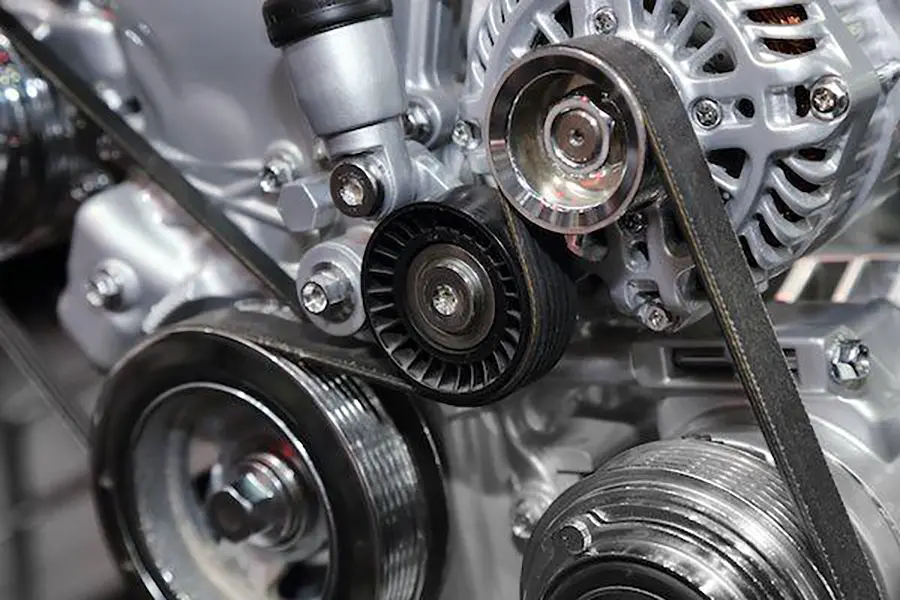
First, What Exactly Are These Two Pulleys?
An idler pulley mounts in a fixed position. Its job is to guide the belt along its designed route. It routes the belt around other engine accessories and sometimes increases the wrap angle between the belt and another pulley to cut down on slip.
It’s a simple part: usually just a pulley body with an internal bearing, bolted to a set spot on the engine. Once installed, it never shifts position to adjust belt tension during normal operation.
A tensioner pulley is the rotating wheel within the belt tensioning assembly. Unlike the fixed idler pulley, it works together with a tensioning mechanism to apply and hold the correct belt tension.
Most modern engines use a spring-loaded swing arm setup. This compensates for belt stretch, temperature changes, and shifting loads from accessories.
One easy detail to remember: the tensioner pulley itself doesn’t always include the spring. The wheel is just a part of the complete tensioner assembly.
4 Key Differences
Definitions only get you so far. When you’re inspecting an engine or placing an order, looks can be misleading. These four practical differences make identification much easier.
1. Function: One Guides, One Maintains Tension
This is the biggest difference.
The idler pulley’s core job is to steer the belt along its correct path and sometimes boost wrap angle. It does not actively adjust tension at all.
The tensioner pulley works with the tensioner assembly to keep belt tension within the proper range. As the engine runs, the tension arm moves to adapt to changes in belt load and vibration.
A simple way to remember: the idler keeps the belt on track; the tensioner system keeps it tight enough.
2. Design and Construction
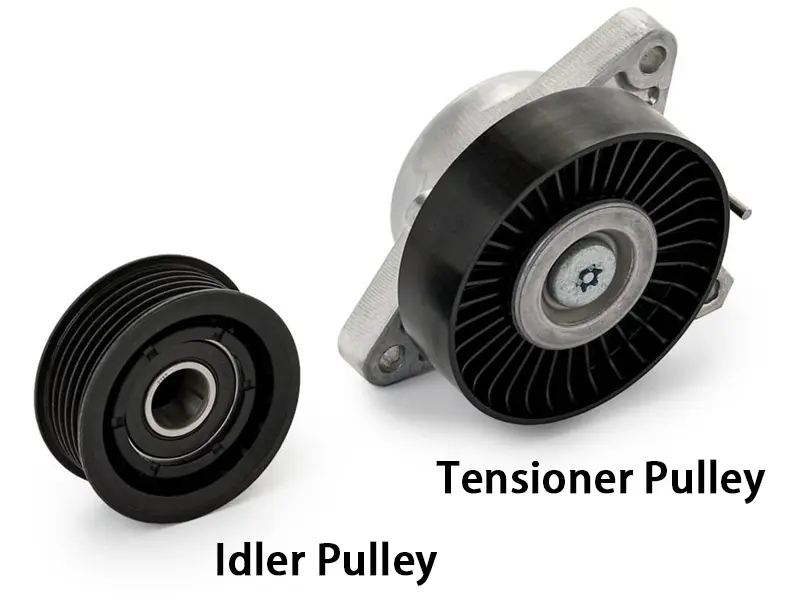
Idler pulleys are simple in design, pulley, bearing and mounting bracket. They may be made of metal or engineered plastic.
The tensioner pulley wheel itself may be similar in appearance to an idler pulley, but the entire tensioner assembly also includes a pivot arm, spring, housing, and sometimes a damping unit. All these parts work together to apply and control tension.
This distinction matters a lot for purchasing. Some product listings label just the wheel as a “tensioner pulley”, while others use the same term for the whole assembly.
Always read the description, check dimensions and vehicle fitment before checking out.
3. Failure Signs and Troubleshooting
The noise itself wont tell you which pulley is broken. Either of the pulleys can have bearing damage. Combine sounds with other clues for accurate diagnosis.
For an idler pulley:
Very often the problem is bad bearings. You may hear a humming, squealing or grinding noise that varies with engine speed.
Warning signs are hard rotation, too much radial play or obvious wobble on the pulley. Damage to the wheel surface can also cause the belt to be out of true and result in uneven wear on the belt.
If the noise persists after the removal of the belt according to service procedures, check the bearing and other noise producing components further.
For tensioner pulley and complete tensioner assembly:
The fault could be in the pulley bearing or in the tensioning hardware. A bad bearing will spin roughly, squeal or grind.
Low tension, slipping, sharp squeals and unstable operation are caused by worn linkage or tired springs. If a pivot or damper is defective or frozen the tension arm will not react normally to changes in belt vibration and load.
4. Mounting and Movement
The idler pulley stays fixed in place. The wheel spins with the belt, but its mounting point never moves to adjust tension.
The tensioner pulley sits on a swing arm or other movable mechanism. The arm shifts as belt loads and vibration change, maintaining the required tension.
Don’t judge its condition only by how much the tension arm moves. Travel range varies widely between engine and tensioner designs.
The real warning sign is not excess, it is wild wobble, binding or movement outside of the manufacturer’s specified limits.

Quick Comparison Table
Comparison Item | Idler Pulley | Tensioner Pulley |
|---|---|---|
Main Function | Guides belt routing | Maintains tension together with the tensioner |
Role | Passive guide | Part of the active tensioning system |
Typical Build | Pulley + bearing | Pulley + bearing, fitted to a tensioning mechanism |
Mounting | Fixed position | On movable swing arm / tensioner assembly |
Common Issues | Bearing noise, wear, wobble | Bearing wear, insufficient tension, seized mechanism |
Replacement | Usually just the pulley wheel | Replace pulley alone or full assembly, based on fault |
Pick the Right Pulley for Reliable Engine Performance
Idler and tensioner pulleys look similar but do very different jobs. Do not assume they are interchangeable just because the outside diameters are the same. Check mounting geometry, belt routing, bearing specs and vehicle compatibility.
Cross referencing part numbers and fitment details at the time of order saves time and headaches with returns for repair shops, auto parts sellers and procurement teams.
GELWERK provides automotive bearings and replacement parts for those looking for a reliable and steady supply. If ordering idler or tensioner pulleys make sure to double check all specs.
Looking for the right automotive pulley or bearing parts? Send over your part number, vehicle model, or requirements to GELWERK, and we’ll work out a suitable replacement option together.
Optimize Your Supply Chain
Work with a Trusted Bearing Manufacturer Today!
Leave us a message. We will contact within 12 hours.