
BLOG
OEM vs Aftermarket Tensioner Pulleys: Which Is Better for Your Vehicle?
That high-pitched engine squealing when accelerating isn’t just annoying; it’s a warning. In practice, this noise indicates a failing tensioner—the constant muscle keeping your serpentine belt tight so your alternator and AC actually run.
Much like buying generic appliance components, choosing a replacement triggers a dilemma: pay for the official part or save cash? Deciding between these options requires weighing upfront savings against the risk of a total breakdown.
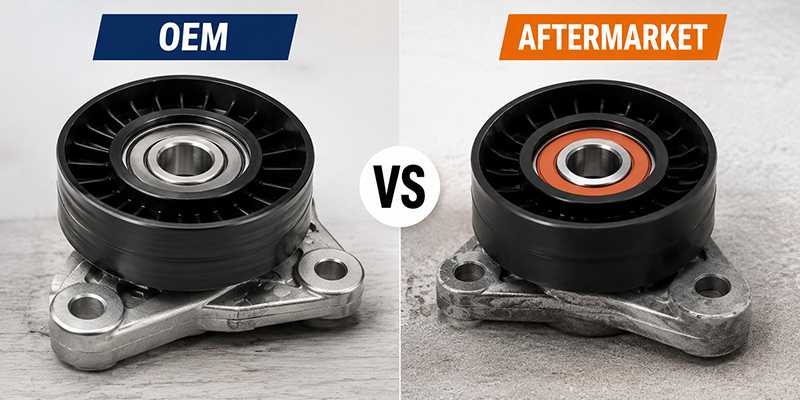
Blueprints vs. Reverse Engineering: How Precision Fitment Prevents Premature Belt Wear
The true difference between aftermarket and OEM pulleys lies in blueprints versus reverse engineering. Original Equipment Manufacturer (OEM) parts are built using the carmaker’s exact mathematical formulas. Aftermarket parts, however, are usually reverse-engineered copies made simply by looking at the original.
Like buying a generic phone charger, these replacements might look identical on the outside but lack the original engineering on the inside.
This copying process often misses the exact manufacturing tolerances required for the precision fitment of original equipment parts.
If a reverse-engineered pulley sits off-center by just one millimeter, it forces your serpentine belt to run at an awkward angle.
That microscopic misalignment causes constant friction, creating an annoying chirp and easily chewing through a brand-new belt in weeks.
Even if the alignment happens to be acceptable, the internal components rarely measure up. Generic brands frequently use cheaper bearings that squeal immediately under the engine’s tension.
Choosing between these options involves more than just original math; it also comes down to physical materials.
Steel vs. Plastic Durability: Why Saving $30 on Parts Could Cost You $300 in Labor
When calculating your serpentine belt tensioner replacement cost, the part itself is usually the cheapest item on the invoice.
Choosing a generic plastic wheel might save $30 upfront, but plastic suffers from material fatigue—weakening under constant engine heat and friction.
Because you pay heavily for a mechanic’s time, installing a cheap pulley that breaks means paying that labor fee twice.
This part-to-labor ratio introduces your Total Cost of Ownership (TCO).
A $100 steel tensioner lasting ten years is mathematically cheaper than paying for a $50 plastic replacement plus $200 in labor every three years.
Ultimately, the lasting life of the OE parts is worth the purchase price so that you don’t have that expensive second trip to the repair shop.
Before approving the repair, compare durability against your budget using this checklist:
- Intended vehicle ownership (long-term vs. short-term)
- Part warranty length
- Material composition (Steel vs. Polymer)
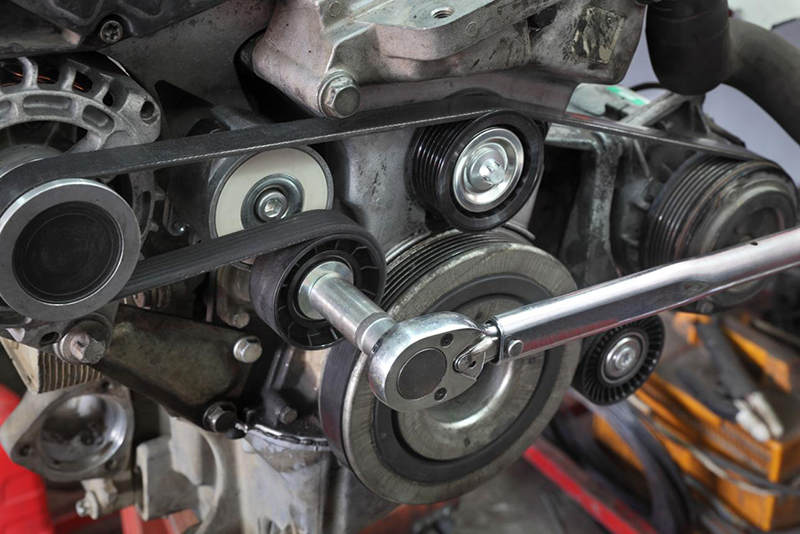
Guaranteeing a Silent Engine and a Solid Warranty
Instead of guessing if your pulley is failing, safely flick the unbelted wheel to test it.
If it freely spins endlessly like a fidget spinner, the bearing is dead.
At the shop, prioritize reliability over cheap savings.
Ask the mechanic how your vehicle warranty and aftermarket components interact to secure a reliable labor guarantee.
You now possess the practical knowledge to verify a quiet engine and a lasting repair before paying the invoice.
Optimize Your Supply Chain
Work with a Trusted Bearing Manufacturer Today!
Leave us a message. We will contact within 12 hours.