
BLOG
The Role of Bearings in Agricultural Machinery and Equipment
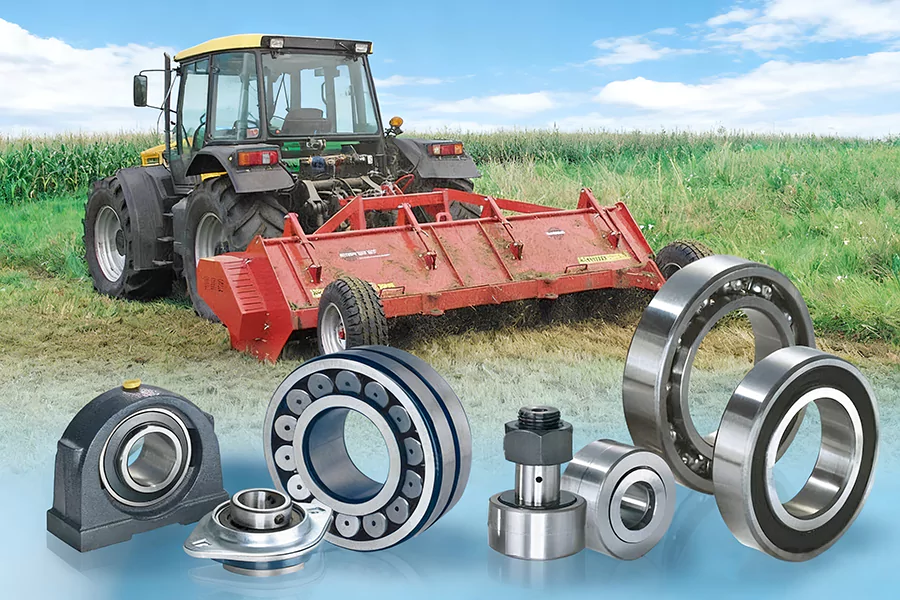
Agricultural machinery operates in one of the harshest mechanical environments of any industry. Dust, moisture, vibration, shock loads, and continuous operation during peak seasons all place enormous stress on rotating components. At the center of this mechanical ecosystem are bearings—precision components that quietly determine the reliability, efficiency, and lifespan of agricultural equipment.
Why Bearings Matter in Agricultural Machinery
1. Friction Management and Wear Reduction
Every rotating shaft generates friction. In agricultural machinery, that friction is amplified by heavy loads and contamination. Bearings create a controlled rolling interface between components, preventing direct metal-to-metal contact.
By maintaining proper lubrication films and load distribution, bearings significantly reduce heat generation and surface fatigue. The result is:
Longer component lifespan
Reduced repair frequency
Lower total cost of ownership
For equipment that may operate 10–16 hours per day during harvest season, this performance margin is critical.
2. Load Handling Under Harsh Conditions
Agricultural equipment is rarely exposed to stable operating conditions. Shock loads from uneven terrain, sudden torque spikes during tilling, and axial forces during steering all place combined stresses on bearing systems.
Common bearing types used in agricultural applications include:
Tapered roller bearings (for combined radial and axial loads)
Spherical roller bearings (for misalignment tolerance)
Insert bearings with housings (for simplified mounting and sealing)
Proper load rating and internal clearance selection are essential to prevent premature fatigue or brinelling.
3. Contamination Resistance and Sealing Performance
In farming environments, contamination—not load—is often the primary cause of bearing failure.
Soil particles, crop debris, water exposure, and chemical fertilizers can degrade lubrication and damage raceways. For this reason, agricultural bearings typically incorporate:
Multi-lip sealing systems
Labyrinth sealing structures
Heavy-duty housings
High-retention grease formulations
Effective sealing dramatically increases bearing service life and reduces maintenance intervals.
4. Reliability and Uptime
Agricultural operations are time-sensitive. A failed bearing during planting or harvest can lead to significant production losses.
High-quality bearings, combined with proper lubrication schedules and periodic inspection, improve:
Machine availability
Operational continuity
Predictable maintenance planning
Modern farms increasingly rely on vibration monitoring and preventive diagnostics to detect early-stage bearing degradation before catastrophic failure occurs.
5. Energy Efficiency and Fuel Savings
Although bearings are small components, their friction characteristics influence overall drivetrain efficiency.
Reduced rolling resistance lowers torque demand on engines and PTO systems. Over time, this translates into:
Lower fuel consumption
Reduced emissions
Improved mechanical efficiency
In high-utilization agricultural fleets, these incremental savings become substantial.
Typical Applications of Bearings in Agricultural Equipment
Tractors
Bearings are used in wheel hubs, axle assemblies, steering systems, gearboxes, and PTO drives. They must support heavy loads while maintaining alignment under vibration.
Harvesters and Balers
High-speed rotational systems, such as threshing drums and feed rollers, depend on durable bearings capable of handling dynamic loads and contamination.
Tillage and Seeding Equipment
Disc harrows, coulters, and planting shafts require bearings that tolerate shock loads and misalignment while maintaining rotational precision.
Irrigation Systems
Center pivot irrigation arms and pump assemblies rely on corrosion-resistant bearings for long-term outdoor exposure.
Key Selection and Maintenance Considerations
Lubrication Strategy
Selecting the correct grease specification—based on load, speed, and environmental exposure—is critical. Agricultural machinery often requires higher-viscosity lubricants with strong water resistance.
Regular relubrication intervals must be maintained, especially in open-field operations.
Installation Accuracy
Improper mounting, excessive interference fit, or misalignment can drastically reduce bearing life. Controlled installation procedures and correct tooling are non-negotiable.
Durability Requirements
Agricultural bearings must be designed for cyclic loading, temperature variation, and contamination exposure. Materials, heat treatment, and sealing configuration all influence performance outcomes.
Common Bearing Failure Causes in Agriculture
Contamination ingress
Inadequate lubrication
Overloading beyond rated capacity
Improper installation
Misalignment
Most failures are preventable through correct specification and disciplined maintenance practices.
The Strategic Impact of Proper Bearing Selection
Using the right bearings in agricultural machinery directly influences:
Operational efficiency
Maintenance cost control
Equipment lifecycle value
Seasonal productivity stability
In modern agricultural operations, bearing performance is not merely a mechanical concern—it is a business variable.
About GELWEKR
GELWEKR provides bearing solutions engineered for demanding agricultural environments. Its product range includes insert bearings, housed bearing units, and sealed bearing assemblies designed to handle heavy loads, contamination exposure, and extended operating cycles.
Optimize Your Supply Chain
Work with a Trusted Bearing Manufacturer Today!
Leave us a message. We will contact within 12 hours.