
BLOG
Why Quality Center Support Bearings Matter in Commercial Vehicles
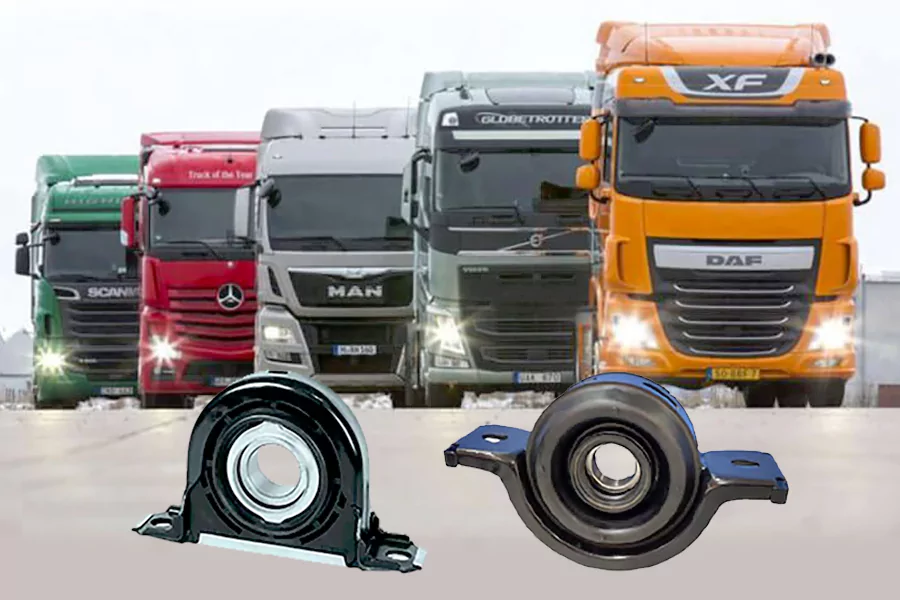
A center support bearing is small but far from insignificant. On multi-piece driveshafts (common in trucks, buses and some heavy vans) it supports the shaft’s midpoint, keeps the geometry in check, and takes the brunt of mid-span movement. When that bearing is well made, drivers notice a quieter ride and service teams see fewer follow-ups. When it’s not, vibration and premature wear show up fast — and costly components pay the price.
What a good center support bearing actually does
It holds the driveshaft steady so the shaft spins true instead of wobbling.
It isolates structure-borne vibration so noise doesn’t travel into the cabin.
It preserves the driveline angle between transmission and differential, which keeps power transfer efficient and predictable.
Those three functions sound simple, but they’re decisive in heavy vehicles where loads, road inputs and miles are all large.
Real symptoms to watch for
If a fleet vehicle has one or more of these, check the center support bearing first:
A rhythmic vibration that grows with speed (often around certain RPM ranges).
A clunk or thump when shifting or accelerating from low speed.
Vibration felt through the floor or steering but not traced to tires or engine mounts.
A quick shop check: jack the vehicle, support the driveshaft, try to move the shaft by hand near the mid support. Any obvious play, cracking of the rubber, or metal-to-metal contact means replacement is overdue.
Why material and build quality matter
Cheap units typically cut costs on rubber formulation, bonding and housing thickness. That leads to early cracking, delamination or loss of damping. A properly engineered center support bearing uses a resilient rubber compound, correct bonding to the metal sleeve, and a stiff housing that resists deformation under load. Those details keep the bearing working across thousands of kilometres and under heavy duty cycles.
Practical buying checklist for procurement teams
When you compare suppliers, verify:
Rubber compound specification (resistance to heat/ozone/fatigue).
Bonding method and evidence of durability testing.
Housing thickness and bearing concentricity tolerances.
Availability of matching part numbers and installation kits.
Warranty terms and failure rate data if the supplier can provide it.
These quick checks separate a short-lived economy part from a fleet-grade solution.
Service tips that save money
Replace the center support bearing during major driveline service or when replacing U-joints — the marginal labor cost is small, and the payoff is large.
Use a simple NVH road test before and after replacement to confirm the fix.
Inspect surrounding mounts and brackets — a new bearing won’t last on a warped or loose bracket.
GELWERK: a practical choice for fleets
For buyers who need repeatable performance, GELWERK offers center support bearings designed with fleet duty in mind. Their products emphasise robust materials and consistent manufacturing tolerances — the sort of characteristics that reduce NVH and cut unplanned maintenance. Choosing a proven supplier for this seemingly minor part often reduces total operating cost more than many larger upgrades.
Optimize Your Supply Chain
Work with a Trusted Bearing Manufacturer Today!
Leave us a message. We will contact within 12 hours.