
BLOG
How to Identify When a Bearing Needs Replacement
Early detection of a failing bearing is critical to prevent breakdowns. Bearings normally run smoothly and quietly; when they start to fail, they produce distinctive symptoms. For example, defects in wheel bearings often cause unusual noises such as grinding, humming, or growling from the wheel area. Similarly, failing bearings often produce distinctive sounds like grinding, rumbling, or squealing. These noises typically grow louder with speed and may change pitch during turns. Other audible clues include squeaks or clicks under load. In practice, if you hear any grinding or howling from the wheels or hubs, it is a strong indicator that the bearing may need replacement.
Audible Clues
Unusual Noises: A healthy bearing should produce a smooth purring sound. Grinding, squealing, knocking, or humming sounds are strong indicators of a problem.
Changes in Noise: The sound may become more pronounced with increased speed or during turns, or you might notice a growling sound similar to mud tires on a vehicle.
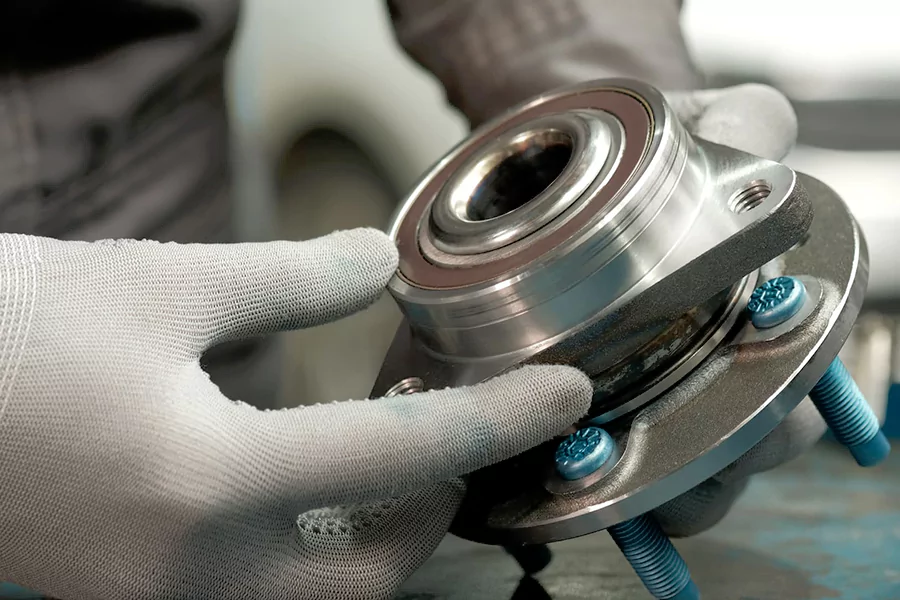
Tactile Symptoms
Excessive Vibration: A bad bearing often causes abnormal vibrations felt through the steering wheel or chassis. Any new or worsening shake while driving – especially at higher speeds – should prompt an inspection.
Wheel Play (Looseness): Excessive play or looseness in a wheel is a classic sign of a worn bearing. You can check this by safely lifting the vehicle and trying to move the wheel back and forth; any noticeable wobble means the bearing is no longer snug. This “shake-and-spin” test is a quick way to catch looseness before it causes bigger issues.
Visual Indicators
Visible Wear: Inspect the bearing itself whenever possible. Look for cracks, pitting, corrosion, or flaking on the bearing races or balls. Even small pits or rust spots (often called spalling) are warning signs. Any obvious damage or discoloration means the bearing’s integrity is compromised and it should be replaced.
Uneven Tire Wear: A loose or damaged bearing lets the wheel tilt slightly under load, so it no longer contacts the road evenly. This wheel wobble causes one side of the tire to scrub, leading to abnormal wear patterns. If a tire is wearing faster on the inside or outside edge without other issues (like alignment), inspect the bearing.
Other Important Signs
Overheating: An overheated bearing is a classic warning sign. A healthy bearing runs moderately warm at most. If you notice a bearing that is significantly hotter than usual, it likely has excessive friction. Bearings generate heat when under load, but a failing bearing will run unacceptably hot. Using an infrared thermometer on bearing housings or hubs can help catch this: an abnormally high temperature should prompt replacement.
Lubrication Issues: Problems with grease or oil often lead to bearing failure. Leaking seals, contaminated grease, or simply running too dry can quickly wear a bearing out. Too little or too much grease causes friction, overheating, and wear. Contaminants – dirt, water, metal shavings – in the lubricant also accelerate damage. If you see grease leaking from a bearing seal, or if dirt has gotten inside the housing, consider the bearing compromised.
Performance Drop: A worn bearing can subtly affect overall equipment performance. Machines with failing bearings may run less efficiently or respond sluggishly. In vehicles, this might mean poorer handling or higher fuel consumption; in machinery it could mean higher motor amps or erratic motion. Any unexplained drop in performance or stability warrants checking the bearings among other components.
Choosing Quality Replacement Bearings
Detecting a bad bearing early lets you replace it before a catastrophic failure. For B2B automotive customers, selecting a trusted brand is just as important as spotting the symptoms. GELWERK offers high-quality automotive wheel bearings engineered to meet strict specifications. GELWERK bearings use durable materials and precise manufacturing to resist wear, noise, and vibration – helping prevent the failure modes described above. By choosing bearings from a reputable supplier like GELWERK, businesses ensure smooth operation and longer life for their vehicles, minimizing downtime and maintenance costs.
Optimize Your Supply Chain
Work with a Trusted Bearing Manufacturer Today!
Leave us a message. We will contact within 12 hours.