
BLOG
Bearing Solutions for Electric Vehicles: What’s Changing?
Electric vehicle (EV) drivetrains impose new demands on bearings compared to combustion engines. Modern EVs need bearings that support much higher speeds and torque while minimizing frictional losses. EVs require high-performance bearings to handle fast-spinning motors and heavy torque loads, and to reduce energy losses. At the same time, EVs demand very low bearing drag to extend range and very low noise for cabin comfort. So EV bearings are being reengineered for new requirement.
Key Changes and Innovations
High-Speed & High-Torque Capabilities
EV motors can spin dramatically faster and produce much more torque than ICE engines, so their bearings must be built for extreme conditions. EV motor shafts often run beyond 15,000 RPM, and bearings are specified with plastic or high-strength cages and heat-treated balls to tolerate this. Some designs even add centrifugal oil discs on the inner ring: a rotating disc limits oil splash into the bearing and reduces splashing losses, thus minimizing bearing friction. These high-speed bearings maintain stability under heavy loads and help prevent lubricant shear-out at high RPM.
Energy Efficiency & Friction Reduction
Due to current battery technology, the limited range of electric vehicles has always been a difficult problem to overcome. So minimizing bearing friction is crucial for EV range and efficiency. Modern EV bearings use optimized geometry, ultra-smooth surfaces, and special low-friction materials. Deep-groove ball bearings with ceramic rolling elements and highly refined raceway finishes greatly cut rolling resistance. Advanced coatings (like DLC) and synthetic greases are also used to reduce friction and wear under high speeds, temperatures, and voltages. Lightweight bearing constructions and hybrid designs (steel races with ceramic balls) further shave power losses.
Noise, Vibration, and Harshness (NVH) Reduction
Because EV cabins are so quiet, even slight bearing noise or vibration can be perceptible. For this reason, EV bearings are engineered for ultra-low NVH. Manufacturers use super-polished raceways (surface roughness ~Ra0.1μm) and precision internal clearances to suppress noise. Bearings like NTN’s 6202V1 are specified with super-finished tracks to reduce vibration and noise, while finite-element simulations help designers avoid resonance issues.
Electrical Erosion Protection
High-voltage EV powertrains can send stray currents through bearings, causing electrical pitting and premature failure. To combat this, EV bearings often include electrical insulation. Common solutions are hybrid ceramic bearings (ceramic balls or coatings) and conductive paths for stray currents. For example, some EV motor bearings use outer rings coated in alumina ceramics to block current flow. Others use conductive greases to shunt charges safely away from raceways. Bearings like the INSOCOAT series have built-in ceramic insulating layers, which prevent electrical conductivity and greatly reduce erosion risk. These insulation measures are now standard in many EV motor and inverter bearings to protect against high-voltage damage.
High Load Capacity
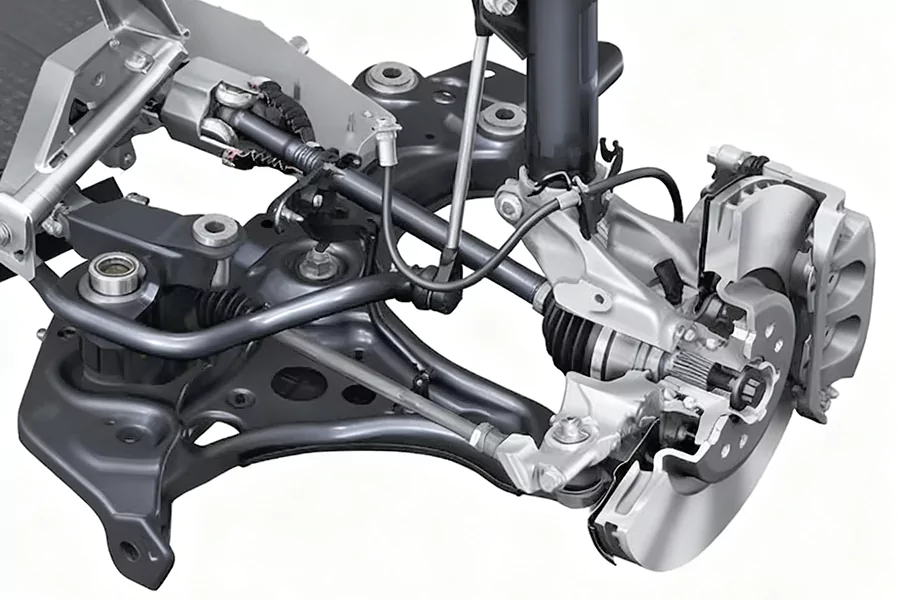
EVs carry large battery packs and often use heavy-duty suspension setups, so wheel and axle bearings must handle greater loads. To meet this, new bearing architectures are emerging. A prime example is the TriFinity wheel bearing: a three-row angular-contact bearing that fits in the same space as a conventional two-row unit. This design achieves roughly 24% higher load capacity and up to 53% lower friction than a comparable two-row bearing. Likewise, many EVs use robust tapered and cylindrical roller bearings in hubs and gearboxes to spread forces. Such multi-row and roller-bearing designs ensure the bearings carry heavy radial and axial loads without failure, keeping EV axles and wheels stable under weight and torque.
Impact on the Automotive Industry
These bearing innovations have tangible benefits across EV performance and industry growth.
- Increased Range & Performance: Lower friction directly extends driving range. Bearings optimized for efficiency help EVs go farther on each charge. High-speed, low-loss motor bearings also allow more powerful motors and faster acceleration.
- Enhanced Comfort: Quieter, smoother bearings reduce noise and harshness in the cabin. Even minor bearing rumble is more noticeable in an EV, so the reduction of NVH greatly improves ride quality. Drivers benefit from a calm, refined experience because carefully engineered bearings dampen vibrations and eliminate whine.
- Improved Durability: Using premium materials and coatings makes EV bearings far more durable. Ceramic elements and advanced greases resist wear and overheating, extending bearing life. This longevity reduces maintenance costs and increases uptime for EV fleets.
- Market Growth: The shift to electrification is fueling massive growth in the bearing industry. The EV-specific bearing market, currently valued at several billion dollars, is expected to grow at double-digit annual rates and reach tens of billions by 2034. Specialized EV bearing products are now a key growth segment for bearing manufacturers. As automakers add more electric models (including bikes, buses and trucks), demand for advanced EV bearings will only accelerate, creating major investment and innovation opportunities.
GELWERK EV Bearings Solution
In this evolving market, GELWERK has positioned itself as a specialist in EV-compatible bearings. GELWERK’s product line includes high-speed motor bearings and robust wheel bearings designed for electric vehicles. For example, GELWERK offers multi-row angular-contact wheel bearings that deliver very high load capacity in a compact package, similar in principle to advanced three-row designs. Welcome to contact us, we are happy to provide you with electric vehicle bearing solutions.
Optimize Your Supply Chain
Work with a Trusted Bearing Manufacturer Today!
Leave us a message. We will contact within 12 hours.