
BLOG
Top Maintenance Tips to Extend Clutch Release Bearing Life
Clutch release bearings are simple parts that get a hard life: high rpm, axial loads and periodic slipping. If left unchecked, they produce noise, increased pedal effort, premature clutch wear and—even worse—transmission damage. For this reason, this guide shows how to troubleshoot common noises, the maintenance steps that actually extend bearing life, and why replacing related parts while the transmission is out is almost always the economical choice.
How to interpret clutch noise?
- Squeal or grinding when the pedal is pressed → likely a worn or poorly lubricated release bearing.
- Whining or grinding when the clutch is engaged → often points to the transmission input-shaft or pilot bearing.
- Noise that disappears with a little pedal pressure → suggests incorrect preload or excess free play in the release system.
Troubleshooting steps
1) Listen and localise
Recreate the noise at idle and while revving; note whether it appears when the pedal is pressed, released, or changes with engine RPM. This simple observation narrows the likely component.
2) Check lubrication and contact points
Cause: dry, contaminated or incompatible grease at the release-bearing contact surfaces or on the input-shaft profile.
Action: inspect grease at the bearing face, guide tube and clutch fork contact. If grease is contaminated, replace the release bearing and follow the manufacturer’s lubrication guideline. Use the lubricant type recommended for the application.
3) Inspect wear and mechanical parts
Release bearing: spin by hand if removable—any roughness, play or noise means replacement.
Clutch fork and pivot: worn forks let the bearing tilt and bind; worn pivots produce noise.
Guide tube: damage or scoring prevents free sliding and causes noise or judder.
These items are inexpensive compared with repeated transmission drops.
4) Check alignment, preload and fitment
Misalignment, wrong orientation, or incorrect preload settings will dramatically shorten bearing life. Ensure the bearing seats properly against the pressure-plate fingers and the fork geometry matches OEM specs. If the bearing was installed backwards or the guide is bent, correct before test-driving.
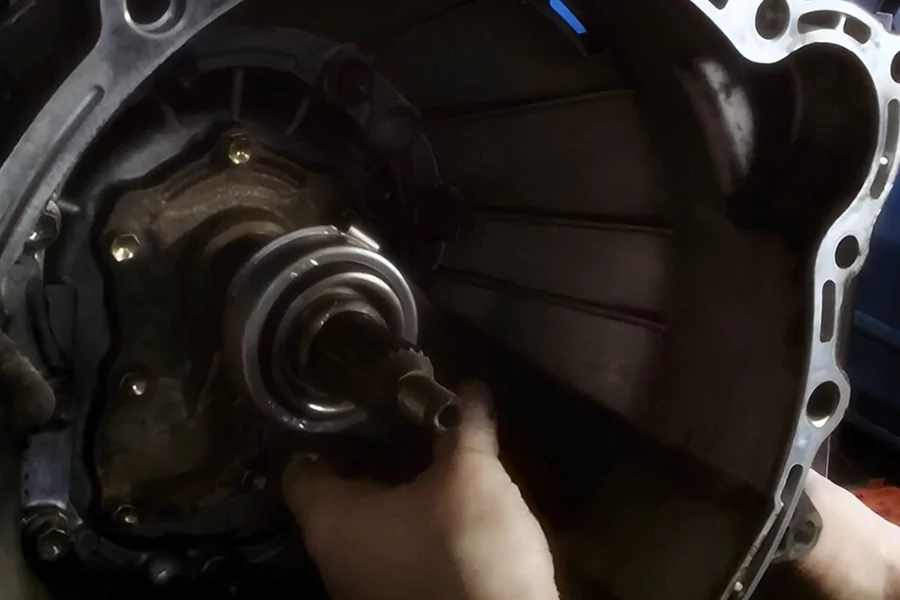
Maintenance and preventive tips to extend bearing life
1.Replace the pilot bearing or bushing when the clutch is serviced
Pilot bearings cause similar symptoms and are cheap to replace while the transmission is out.
2.Always consider replacing the whole clutch kit
Labor to access the bearing is the expensive part—replacing the clutch disc, pressure plate and release bearing together prevents repeat jobs and is widely recommended.
3.Use the correct grease and limited lubrication
Follow the specified lubricant. Over-greasing or using the wrong grease can contaminate the clutch disk—use only the recommended product.
4.Inspect linkage or hydraulic system regularly
For cable clutches, check cable stretch and adjust free-play at service intervals. For hydraulic systems, inspect slave and master cylinders for leaks.
5.Address misalignment and drivetrain issues
Engine or transmission misalignment, a warped flywheel or a damaged centering sleeve leads to uneven loading and premature failure.
6.Avoid clutch riding and abusive operation
Prolonged slipping, hill holding or riding the clutch keeps the bearing loaded and overheats grease.
7.Store replacement bearings correctly
Bearings are sensitive to contamination and storage conditions—follow supplier recommendations.
Quick maintenance checklist
Inspect bearing, guide sleeve, fork and pivot.
Check clutch pedal free-play and adjust per manual.
Replace pilot bearing and release bearing during clutch service.
Grease hub/profile only with recommended product and minimal amount.
If noise is from input shaft or pilot bearing, plan transmission disassembly and inspection.
Why replacing the clutch kit pays off
Labor to remove the transmission is high in both time and cost. Therefore, because the release bearing, pilot bearing and clutch disk often wear together or cause cascading damage, replacing the whole kit while the transmission is out ultimately reduces the risk of a repeat repair and total cost of ownership.
About GELWERK
At GELWERK we design bearings for demanding applications—commercial vehicles, agricultural machines and industrial drivetrains. In particular, our clutch release bearings are engineered for consistent preload, durable sealing and compatibility with modern clutch kits to reduce noise and extend service life. Moreover, if you want bearings and clutch kits that follow OEM tolerances and come with installation guidance, contact GELWERK’s technical team for specs and compatibility help.
Regular inspection, correct lubrication, prompt replacement of worn components, and replacing related parts while the gearbox is open are the most effective ways to extend clutch release bearing life. In addition, if you need a hand with part selection or OEM cross-referencing for fleet or workshop volumes, GELWERK can help — email our sales engineering team to get datasheets and recommended service intervals.
Optimize Your Supply Chain
Work with a Trusted Bearing Manufacturer Today!
Leave us a message. We will contact within 12 hours.