
BLOG
EV Bearings: Key Requirements for Electric Vehicle Applications
Table of Contents
Electric vehicles are changing how automotive bearings are designed and selected. Compared with traditional combustion-engine vehicles, EV powertrains can operate at higher rotational speeds, generate different vibration patterns, and expose bearings to electrical currents from the motor and inverter system.
For bearing buyers, automotive parts suppliers, and engineers, this means a bearing used in a conventional vehicle may not always be suitable for an electric vehicle. Speed, friction, noise, electrical insulation, load capacity, lubrication, and operating temperature all need to be considered together.
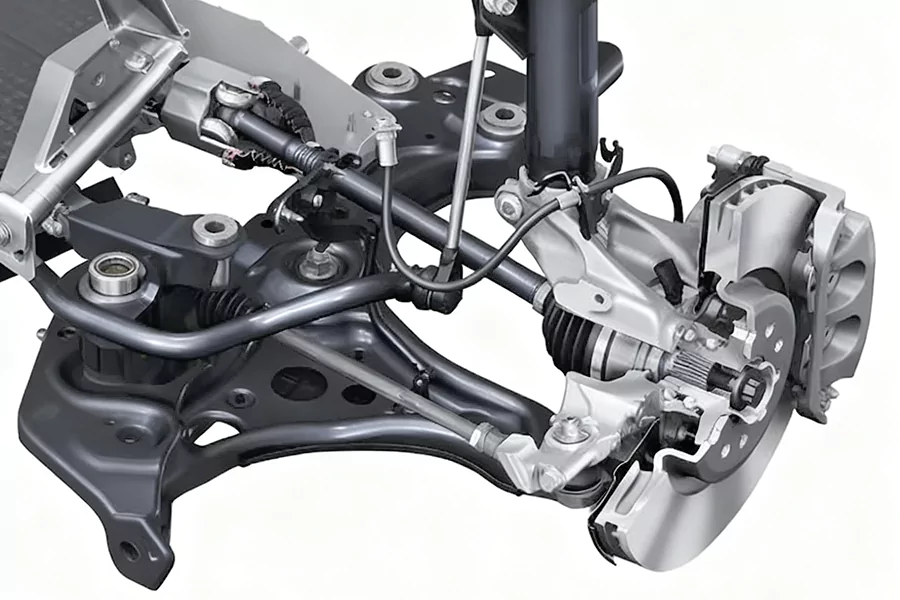
Why Do Electric Vehicles Need Different Bearings?
An EV powertrain has fewer mechanical components than a traditional internal combustion engine, but the operating conditions of some rotating components can be more demanding.
Electric motors can operate at high rotational speeds and deliver strong torque from a low-speed range. At the same time, reducing mechanical losses is important because even small efficiency improvements can contribute to better energy use.
EV bearings may also face electrical current passing through the bearing, especially in motor and inverter-related applications. If the bearing is not properly selected, electrical discharge can damage raceways and rolling elements over time.
For these reasons, EV bearing design focuses on several key requirements rather than simply increasing bearing strength.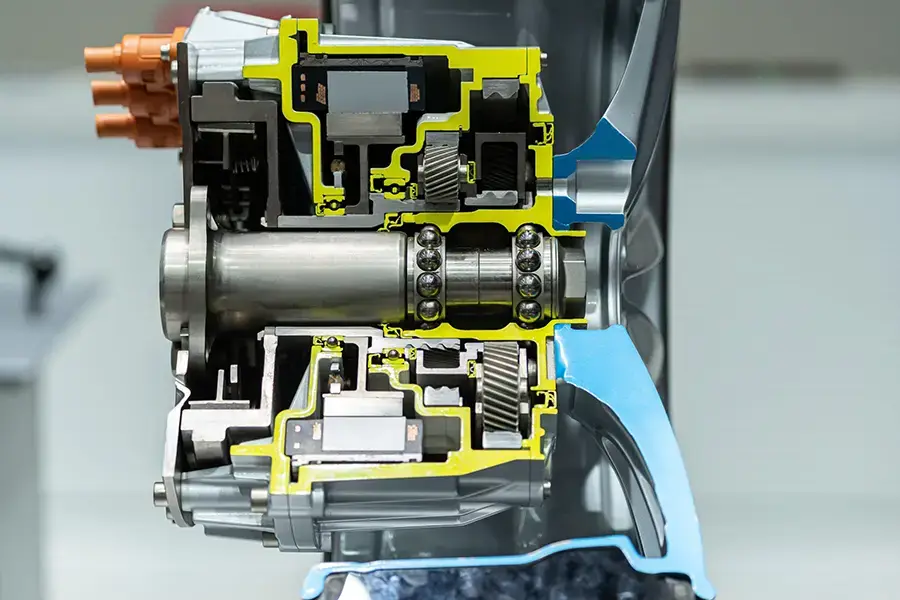
Key Requirements for EV Bearings
1. High-Speed Operation
Electric motors can run at very high rotational speeds, placing greater demands on bearing cages, lubrication, rolling elements, and raceways.
At high speed, the bearing needs to maintain stable rotation while controlling heat generation and lubricant losses. Bearing manufacturers may use optimized internal geometry, lightweight cages, suitable lubricants, and precision-machined raceways for high-speed applications.
The correct bearing specification depends on the motor design, operating speed, temperature, load, lubrication system, and available installation space.
2. Low Friction and Energy Efficiency
Reducing friction is an important part of improving EV drivetrain efficiency.
Bearing friction comes from several sources, including rolling contact, sliding contact, seals, and lubricant resistance. Bearing geometry, surface finish, internal clearance, sealing design, and grease selection can therefore affect the overall running efficiency.
For some high-speed applications, hybrid ceramic bearings with ceramic rolling elements and steel rings may also be considered. Ceramic rolling elements are lighter and can provide favorable performance under certain high-speed operating conditions.
The appropriate low-friction solution depends on the application rather than one bearing type being suitable for every EV.3. Low Noise and Vibration
Electric vehicles are generally quieter than vehicles with combustion engines. As a result, mechanical noise that may have been masked by engine and exhaust noise can become easier to notice.
Bearing precision therefore plays an important role in EV NVH performance.
Raceway surface quality, dimensional accuracy, internal clearance, rolling element quality, cage design, and lubrication can all influence bearing noise and vibration.
For applications where low NVH is important, bearing manufacturers may use refined raceway finishing and tighter manufacturing controls to achieve smoother running performance.
4. Electrical Insulation
Electrical current is another important consideration for EV motor bearings.
The combination of high-voltage electrical systems, motors, and inverter switching can create electrical potential differences that may cause current to pass through a bearing. Repeated electrical discharge can lead to surface damage, pitting, fluting, lubricant degradation, and eventually premature bearing failure.
Several solutions are available depending on the application.
These can include:
- Electrically insulated bearings
- Ceramic-coated bearing rings
- Hybrid ceramic bearings
- Electrically conductive grounding solutions
- Lubricants designed for specific electrical environments
The correct approach depends on the motor architecture and electrical system. Bearing selection should therefore consider electrical conditions as well as mechanical loads.
5. High Load Capacity
EV batteries add considerable vehicle weight, increasing the demands placed on wheel, axle, and suspension components.
Wheel bearings need to support radial and axial loads while maintaining stable rotation under acceleration, braking, cornering, and road impacts.
Different bearing arrangements can be used to meet these requirements. Depending on the vehicle and available space, manufacturers may use double-row angular contact bearings, tapered roller bearings, cylindrical roller bearings, or multi-row designs.
A compact multi-row bearing can provide high load capacity while fitting within a limited installation space. The final selection depends on the vehicle weight, hub design, expected loads, dimensions, and service conditions.Where Are Bearings Used in Electric Vehicles?
EV bearings are used in several parts of the electric drivetrain and chassis, and each application has different operating requirements.
EV Motor
Motor bearings support the rotating shaft and may need to handle high speed, temperature changes, vibration, and electrical currents.
Reduction Gearbox
Bearings in the reduction gearbox support rotating shafts under radial and axial loads. Speed, lubrication, gear loads, and operating temperature are key considerations.
Wheel Hub
Wheel bearings support the wheel assembly and handle radial and axial loads during acceleration, braking, cornering, and road impacts. EV weight makes load capacity, durability, sealing, and NVH important factors.
Other ComponentsBearings can also be used in auxiliary motors, pumps, and other rotating systems, depending on the application.
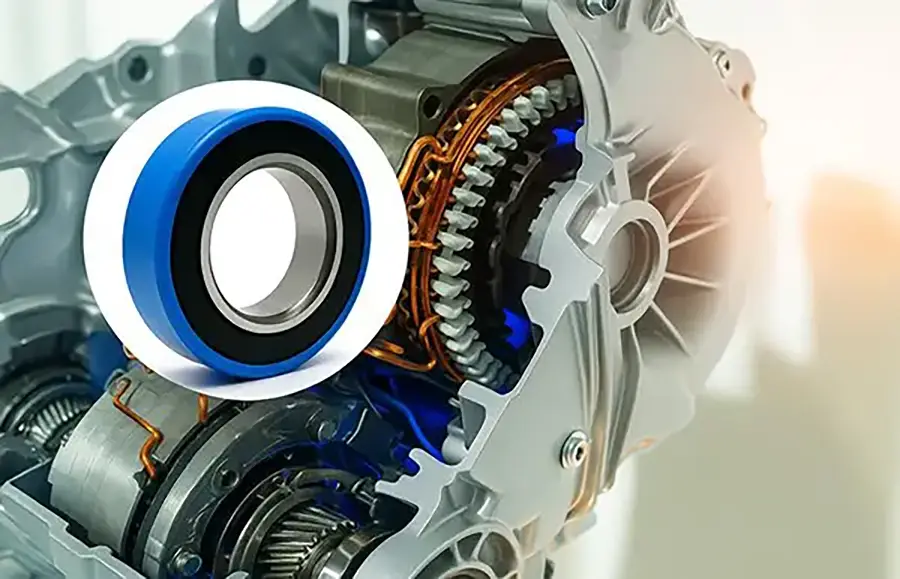
How to Select the Right EV Bearing?
| Requirement | What to Consider |
|---|---|
| High speed | Bearing design, cage material, lubrication and temperature |
| Low friction | Internal geometry, seals and lubricant |
| Low NVH | Manufacturing precision, clearance and surface quality |
| Electrical protection | Insulated or hybrid bearing solutions |
| High load | Bearing type, load rating and operating conditions |
| High temperature | Grease, sealing and material selection |
| Limited space | Bearing dimensions and compact design |
| Service life | Load, speed, lubrication and environment |
When sourcing an EV bearing, start with the actual application rather than the vehicle name alone.
The following information can help suppliers evaluate the requirement:
- Bearing part number or OEM reference
- Inner diameter, outer diameter, and width
- Application position
- Maximum operating speed
- Radial and axial load
- Operating temperature
- Lubrication requirements
- Electrical insulation requirements
- Sealing requirements
- Available installation space
GELWERK EV Bearing Solutions
GELWERK provides bearing solutions for automotive applications where speed, load, friction, noise, and operating conditions need to be considered together.
Our automotive bearing range can be used for applications such as wheel hubs and other rotating systems. Depending on the application, bearing selection can be evaluated around dimensions, load requirements, rotational speed, sealing, lubrication, and material configuration.
For EV-related bearing requirements, customers can provide a bearing number, drawing, dimensions, product photograph, or application information. This allows the required bearing specification to be reviewed before a suitable solution is proposed.
For replacement and sourcing projects, GELWERK can also support customers with product identification and application-based bearing selection.Contact GELWERK for EV Bearing Solutions
GELWERK provides automotive bearing solutions for applications where speed, load, friction, noise, lubrication, and operating conditions need to be considered together.
Our automotive bearing range covers applications such as wheel hubs and other rotating systems. Bearing selection can be evaluated based on dimensions, load, speed, sealing, lubrication, and material requirements.
For EV-related projects, customers can provide a bearing number, drawing, dimensions, product photograph, sample, or application information. Our team can review the requirements and help identify a suitable bearing solution.
Optimize Your Supply Chain
Work with a Trusted Bearing Manufacturer Today!
Leave us a message. We will contact within 12 hours.